October 10, 2026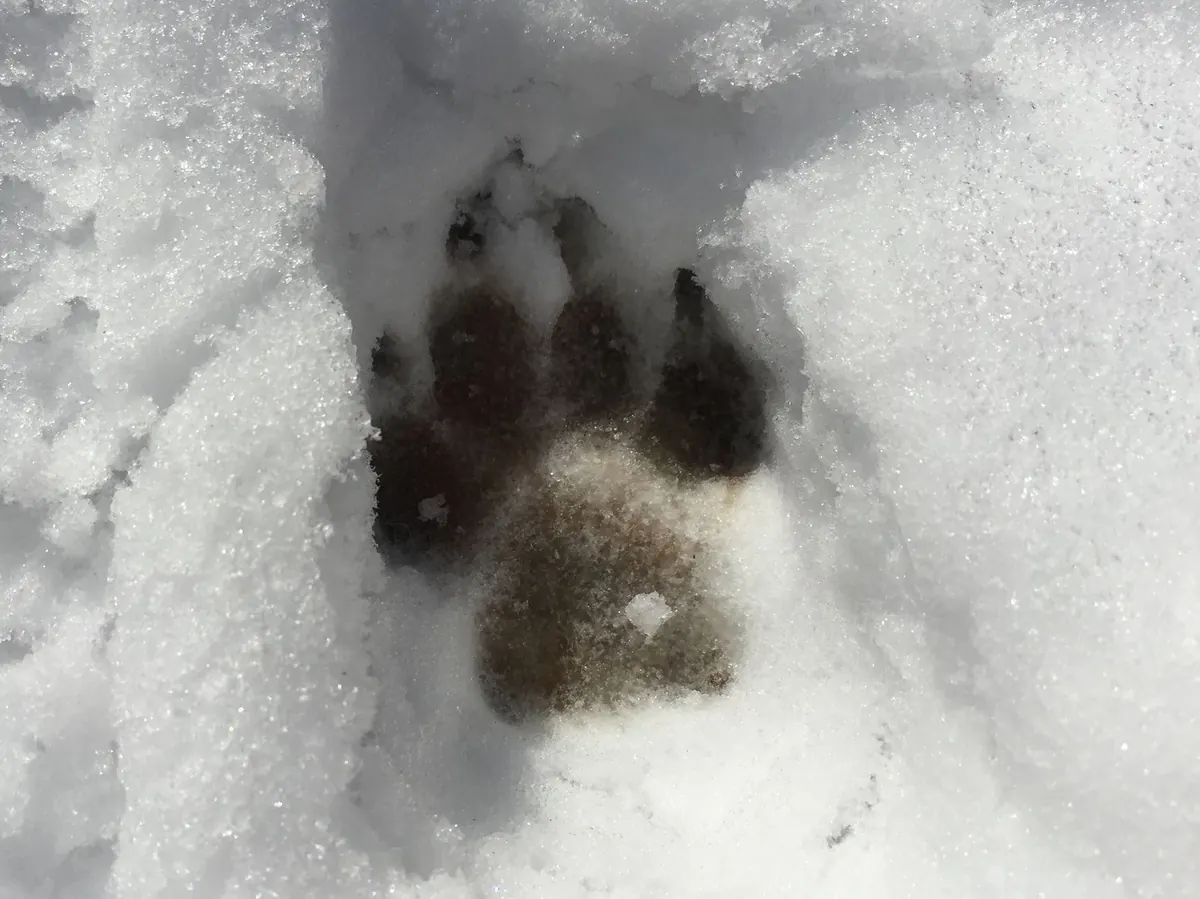
A wood at first light is rarely silent, yet it can feel empty of animals. You hear the tick of a wren, the drumming of a woodpecker, the crash of something large moving off through bracken, and then nothing. Most British woodland mammals work the dark or the half-hour either side of it, and the deer, which are active by day, have spent their lives learning not to be looked at. To know what lives in a wood, learn to read what it leaves behind. It costs nothing: a wet morning, a slow pace and a habit of looking down.
Why the signs usually beat the sighting
The standard advice is to go out and look for animals. In woodland it mostly fails. A roe deer can stand four metres away in hazel coppice and stay invisible; a badger sett can sit twenty metres from a footpath and go unnoticed for years.
Signs, by contrast, stay still while you examine them. They also tell you more than a glimpse does. A print in wet clay gives you the route an animal takes. A latrine marks the edge of a territory. A chewed cone gives you a species and a season. A sighting is a moment; a trail is a map.
Reading the ground: tracks and runs
Soft, recently wet ground is where to start: gateways, puddles, ditch edges, the poached mud along field margins, and the needle litter beneath conifers, where prints hold their shape beautifully. Paths in woodland that look swept or worn bare are runs. Follow them and look for tunnels pushed through grass and bramble, and for hair caught on fence wire.
What the common prints look like
- Badger: a broad, kidney-shaped pad with five toes in a shallow arc, claws often showing. Badgers use regular paths, so their prints tend to sit nearly in a line.
- Fox: narrower and more oval, four toes, with a clear gap between the toes and the pad. Easily confused with a dog, which usually leaves a blunter print and wanders; a fox walks a straight line along a hedge or ride.
- Deer: two cloven, heart-shaped hooves, splayed when the animal is moving fast. Roe prints are small and neat; fallow and red are much larger.
- Rabbit and hare: small, round prints. Rabbits' runs — short cropped tunnels through grass — are usually the giveaway; hares leave wider-spaced prints out in the open.
Droppings, pellets and leftovers
Droppings are the most reliable sign for several species, and the easiest to walk past without noticing. Badgers scrape shallow pits, called latrines, at path junctions and territory edges, and use the same ones for years. Fox scats are twisted, often with pointed ends, frequently left on a stone or a tussock, and may hold fur, feathers and fruit pips. Otter spraint sits on flat rocks by water, full of fish scales, with a sweet, hay-like smell. Deer leave dark pellets, shiny when fresh and duller with age, sometimes dimpled at one end.
Owl pellets — grey, cigar-shaped bundles of fur and small bones — collect under regular roost trees, often conifers. Wash your hands after any close inspection, and keep dogs from eating anything they find.
Nests, dreys and holes in trees
Look up as often as you look down. Grey squirrels build dreys: football-sized balls of twigs and leaves, usually high in a fork, with one or two spare dreys nearby. A drey is not proof of a squirrel, since other species take them over, but it is a good place to start looking. Dormouse nests are smaller and neater, woven from honeysuckle bark low in the scrub.
Tree holes are easier to read than they look. Woodpecker holes tend to be cleanly cut and slightly oval; a nuthatch plasters mud around the entrance, so the rim looks smoothed. Scratch marks around a hole, or fresh woodchips below it, suggest recent work. Birds' nests in use, dormice and bats are all legally protected in the UK, so keep your distance and leave what you find where it is.
Gnaw marks, stripped bark and chewed nuts
Teeth often leave a clearer record than feet. Squirrels strip cones and leave the spindle behind, the chewed core looking like a small Christmas tree; mice nibble the scales but leave the core more or less whole.
Chewed hazel nuts are worth a proper look. Small rodents leave a neat round hole, and the tell is in the inner rim: a dormouse tends to leave it smooth, while a wood mouse leaves fine tooth marks. Treat that as a guide rather than a certainty.
Bark tells a story too. Deer rub their antlers on young trees in autumn, shredding the bark into vertical strips. Grey squirrels strip bark higher up, often from sycamore and beech, in late spring. Voles work at ground level, leaving fine parallel tooth marks on stems.
Training your eye: kit and habits
Little equipment is needed, and none of it is expensive.
- A notebook and pencil — sketching a print fixes it in your memory better than a photograph.
- A coin or a short tape measure for scale in photographs.
- A hand lens for tooth marks and cone cores.
- A field guide to tracks and signs, carried rather than left at home.
- Old trousers, a kneeling mat, and a torch with a red filter if you are out at dusk.
Habits matter more than kit. Walk the same stretch once a fortnight. Go out after rain. Move slowly, stop often, and stand still for a full minute at a time; animals notice movement far more than they notice shape.
Your first hour in the wood
Pick a short stretch — two hundred metres of ride, or a wood edge beside a field — and do the same thing each visit.
- Walk it slowly with your eyes on the ground. Stop at every patch of mud, gateway and puddle.
- Kneel at the first clear print. Photograph it with a coin for scale, then sketch the shape.
- Look up at trunks and lower branches for holes, dreys and stripped bark.
- Check the base of a big conifer or a favourite roost tree for pellets.
- Note the date, the weather, what you found and what you expected but did not.
Return in a fortnight. Reading signs is a practice, not an event, and a path you have seen dry, wet and frozen will start to explain itself. Anything you cannot identify, leave in place; half the pleasure is in not knowing for a while.
Photo: Megan Thompson / Pexels